
 Vezi mai multe
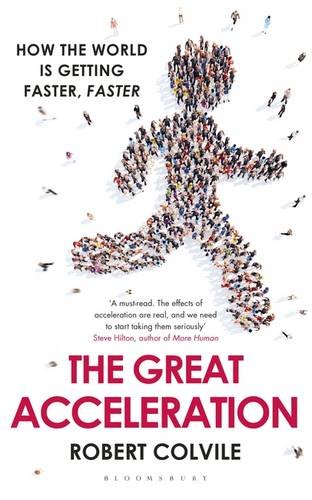
A revelatory account of how our society is speeding up and why we should embrace the acceleration, The Great Acceleration is a fascinating insight into the science and promise of the modern world from a brilliant new writer
Instant messaging. Superfast broadband. High-frequency trading.
The world is, undeniably, accelerating. Great acceleration of change is evident in all spheres of modern life. In this revelatory study, Robert Colvile examines how and why this is happening, why it's unlikely we'll be able to slow down - and why this may be no bad thing.
It's a book peppered with slogans from this new world's heavy hitters: Ried Hoffman, the inventor of LinkedIn: 'If you're not embarrassed by your first version, you waited too long to ship it'; 'Carry on failing until you succeed'; Jeff Bezos, 'Amazon isn't happening to the book business, the future is happening to the book business'; 'You jump off a cliff and you assemble an aeroplane on the way down' is from Mark Zuckerberg; 'Move fast and break things' is another of his.
This is a book that zips along itself but whose words will make you slow down and think. Comparing the development of cities and villages, advanced economies and underdeveloped countries, Colvile explores the opportunities that this faster communication and operation could bring and how we must adapt ourselves to cope with the constant need to disrupt and fracture ourselves to survive. The Great Acceleration is a vertiginous read, incredibly fast itself, and incredibly smart.
About the Author
Robert Colvile has been a columnist, leader writer and comment editor with the Daily Telegraph. Among his many duties, he was supervising the paper's Science and Digital Life pages, serving as comment editor of the Sunday Telegraph while still in his twenties, and producing a host of editorials, features, reviews and opinion pieces. He went on to be news director at BuzzFeed UK. He has a Masters degree from Cambridge in International Relations, is a regular pundit on Sky News, a Research Fellow at the Centre for Policy Studies (a leading British think-tank) and author of an influential report on how the internet is transforming British politics, which was praised by Chancellor George Osborne among others.