
In viewing the Great War through the portraits of those involved, Paul Moorhouse looks at the bitter-sweet nature of a conflict in which valour and selfless endeavour were qualified by disaster and suffering, and examines the notion of identity how various individuals associated with the war were represented and perceived. The narrative is structured chronologically, with thematic sections devoted to conflicting pairs Royalty and the Assassin, Leaders and Followers, The Valiant and the Damned which reveal the radical differences between those caught up in the conflict in terms of their respective roles, aspirations, experiences, and, ultimately, their destinies. Leaders and Followers, for example, examines the dichotomy between the representation of senior military leaders such as Blumer, Foch, Haig and Hindenburg, who were responsible for directing the war, and that of the ordinary soldiers charged with executing it. While portraits of the generals emphasise their personal profile, gallantry and the trappings of military power, paintings of the rank and file are characterised by a tendency to anonymity, in which individual identity was subsumed with the impression of types. Claude Rogerss imposing painting Gassed, for instance, presented the individual soldier as a kind of cipher, a depersonalised embodiment of common, degraded experience. Illustrated throughout with images both well known and less familiar, the book concludes with a section entitled Tradition and the Avant-Garde, which focuses on the struggle artists faced in finding an appropriate language in which to depict those who had experienced the unimaginable horror at the front: either by resorting to the steadying hand of tradition or a radical visual language of expressive distortion.
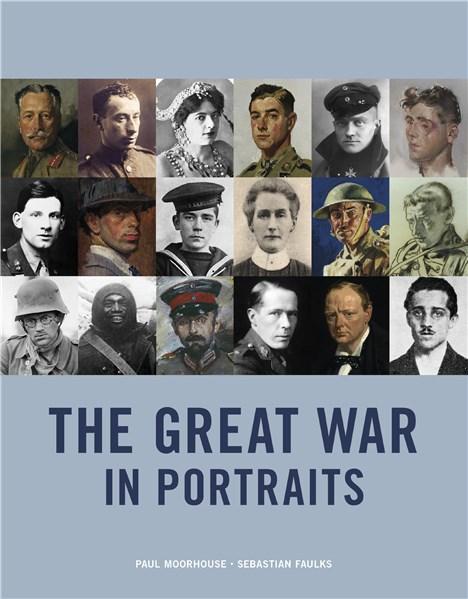
The Great War in Portraits
Categories:
Language:
Engleza
Publishing Date:
2014
Publisher:
Cover Type:
Paperback
Page Count:
176
ISBN:
9781855144682
Dimensions: l: 18.3cm | H: 24cm | 1.7cm
6960
116.00lei
40% discounti
The discount is applied to the reference price (the lowest price in the past 30 days).
The discount is applied to online orders only.
The discount is applied to online orders only.
Next Day Delivery!
In stock
Today by bike delivery
Next Day Delivery!
Next Day Delivery!
Price applicable only to online purchases!
Free Gift Wrapping!
Free shipping over 150 RON
You can return it in 14 days
You got questions? Contact Us!