
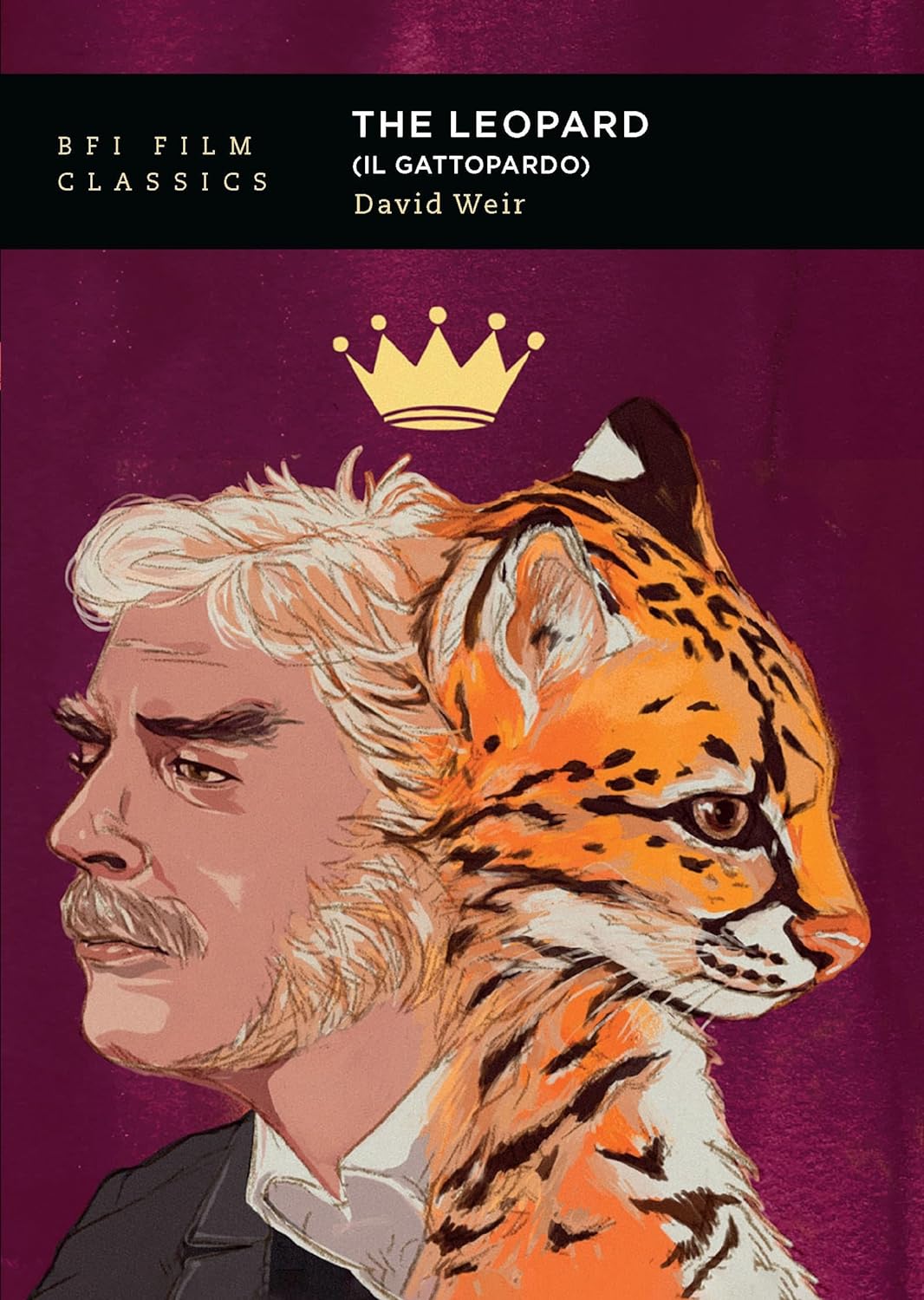
Luchino Visconti's The Leopard (Il Gattopardo, 1963) tells the story of an aristocratic Sicilian family adjusting to the realities of political and commercial modernity after the unification Italy during the Risorgimento.
The film, starring Claudia Cardinale, Burt Lancaster and Alain Delon, met with success upon its initial release, winning the Palme d’Or at Cannes and having a successful theatrical run in Europe. Despite this, however, it did not do well with English-speaking audiences, and eventually even fell out of favour with Italian audiences, who took issue with the way Risorgimento history was represented.
David Weir's study of the film seeks to understand the film's paradoxical place in Italian film history. He argues that Visconti's use of artifice, narrative and history, all aspects that came to be criticised, were in fact, essential to his cinematic art, and can all be understood as strengths of the film. Providing a scene-by-scene analysis of the film, as well as illuminating its relationship to the Lampedusa novel from which it was adapted, Weir suggests that Visconti's film goes beyond mere adaptation, using the form of the novel for cinematic purposes and making The Leopard a cinematic novel in its own right.
He goes on to situate the film within Visconti's career, questioning whether the uneven reception of the film reflects the paradox of Visconti's social status as a Marxist aristocrat and his position as an auteur director whose films borrowed heavily from the decadent tradition, while at the same time professing allegiance to the Italian Communist Party.