
A Wall Street Journal Top Ten Book of the Year
A First Things Books for Christmas Selection
Winner of the Expanded Reason Award
"This important work of moral philosophy argues that we are, first and foremost, embodied beings, and that public policy must recognize the limits and gifts that this entails."
-Wall Street Journal
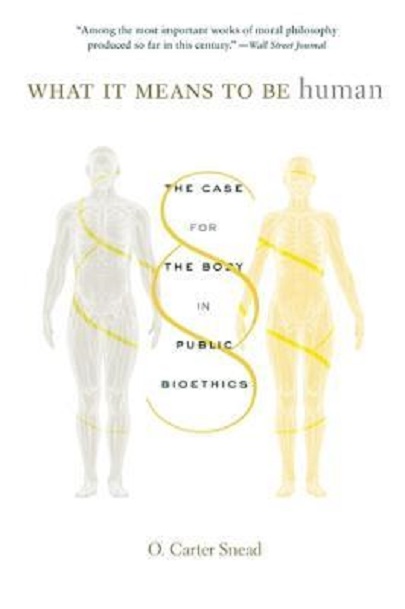
The natural limits of the human body make us vulnerable and dependent on others. Yet law and policy concerning biomedical research and the practice of medicine frequently disregard these stubborn facts. What It Means to Be Human makes the case for a new paradigm, one that better reflects the gifts and challenges of being human.
O. Carter Snead proposes a framework for public bioethics rooted in a vision of human identity and flourishing that supports those who are profoundly vulnerable and dependent-children, the disabled, and the elderly. He addresses three complex public matters: abortion, assisted reproductive technology, and end-of-life decisions. Avoiding typical dichotomies of conservative-liberal and secular-religious, Snead recasts debates within his framework of embodiment and dependence. He concludes that if the law is built on premises that reflect our lived experience, it will provide support for the vulnerable.
"This remarkable and insightful account of contemporary public bioethics and its individualist assumptions is indispensable reading for anyone with bioethical concerns."
-Alasdair MacIntyre, author of After Virtue
"A brilliantly insightful book about how American law has enshrined individual autonomy as the highest moral good...Highly thought-provoking."
-Francis Fukuyama, author of Identity
Categories:
Language:
Engleza
Publishing Date:
2022
Publisher:
Cover Type:
Paperback
Page Count:
336
ISBN:
9780674278769
Dimensions: l: 14cm | H: 21cm | 2.48cm | 344g
8460
141.00lei
40% discounti
The discount is applied to the reference price (the lowest price in the past 30 days).
The discount is applied to online orders only.
The discount is applied to online orders only.
Next Day Delivery!
In stock
Today by bike delivery
Next Day Delivery!
Next Day Delivery!
Price applicable only to online purchases!
Free Gift Wrapping!
Free shipping over 150 RON
You can return it in 14 days
You got questions? Contact Us!