
A Memoir of the Warsaw Uprising is both a work of memory and a work about memory. Miron Białoszewski, the great avant-garde Polish poet, memorializes the doomed uprising of the Polish population against their Nazi masters, which began on August 1, 1944, and was eventually abandoned on October 2, 1944, with the physical destruction of Warsaw, street by street and house by house, and the slaughter of 200,000 civilians.
Yet Białoszewski begins his memoir not with an invocation of the great historical events about to unfold but with a simple observation: “Tuesday, August 1, 1944, was cloudy, humid, not too warm...and I remember that there were many trolleys, cars, and people and that right after I reached the corner of Zelazna Street, I realized what day it was (the first of August) and I thought to myself, more or less in these words: ‘August 1 is Sunflower Day.’ ”
Białoszewski concentrates on recalling the things he saw, felt, smelled, and heard. Each object is precious. Each possesses its own integrity, which the violence of the Nazis will destroy. In reclaiming these objects, Białoszewski combats the inner evil of the time he recounts, the thinking of those for whom the individual is meaningless and the moment is a fraud. In dwelling with loving concern on the cobblestones, glass jars, and the casual words people spoke in passing, Białoszewski sets himself against those for whom history justifies all actions and violence is a substitute for truth.
Białoszewski rescues memory from history. He rescues the moment from the epic sweep of the thousand-year Reich. He observes “the glaring identity of ‘now.’ ” He tells us: “That is why I am writing about this. Because it is all intermeshed. Everything. My neighborhood too. Leszno, Chlodna, and Muranow. Because the majority of my churches were there. Then the Jews. And Kochanowski. And that woman near the pillars.” In reclaiming the memory of the anonymous “woman near the pillars,” Białoszewski reaffirms the life-giving power of the imagination, which all the force of the inhuman Nazi machine could not—and cannot—obliterate.
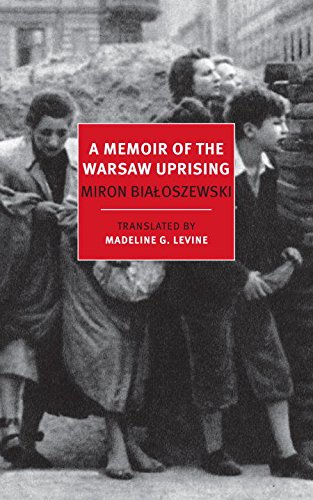
A Memoir of the Warsaw Uprising
Categorii:
Limba:
Engleza
Data publicarii:
2015
Editura:
Tip coperta:
Paperback
Nr. pagini:
256
ISBN:
9781590176658
Dimensiuni: l: 12.5cm | H: 20.3cm | 1.5cm
13200
Stoc furnizor
Livrare în 2-3 săptămâni!
Preț valabil exclusiv online!
Împachetare cadou gratuită!
Transport gratuit peste 150 de lei.
Retur gratuit în 14 zile.
Ai întrebări? Contactează-ne!