
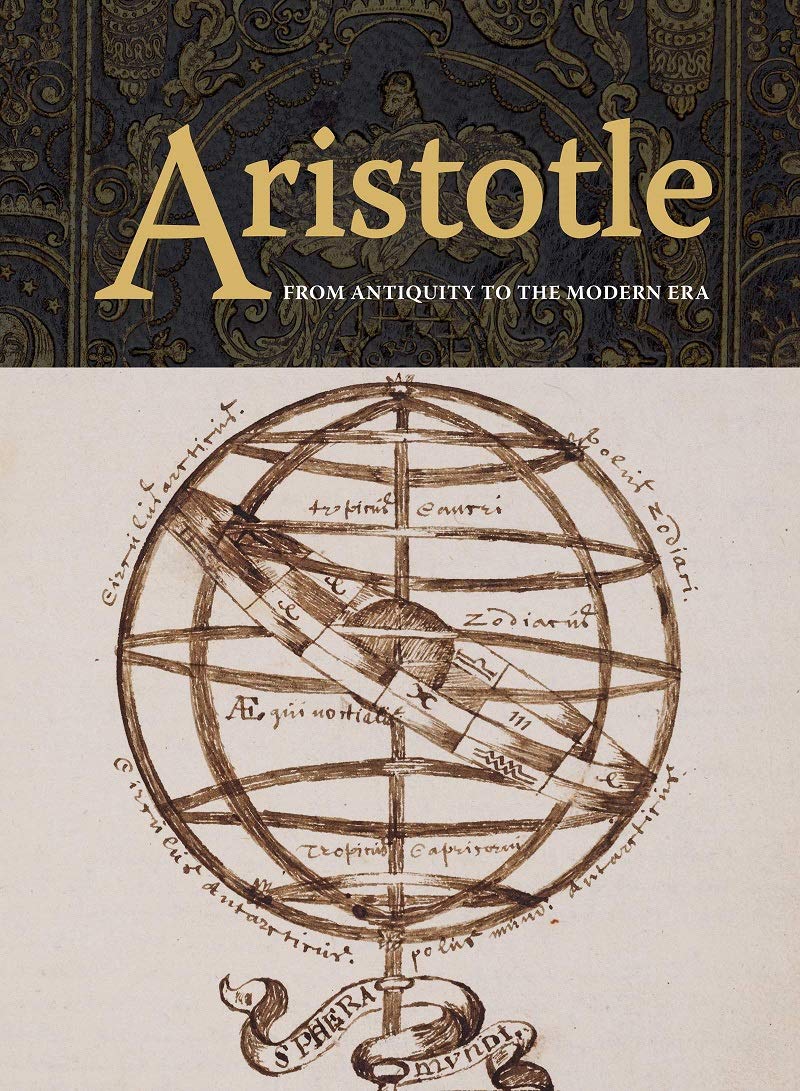
Examines the ways in which the Aristotelian corpus has been transmitted over time, focusing on one crucial, extended moment: the moment when, thanks to the invention of printing, Aristotle's works became widely available. Aristotle towers over Western philosophy and science as no other single person does. As they have come down to us, Aristotle's works comprise a veritable encyclopedia of philosophy and logic, the physical and natural sciences, ethics and politics. Aristotle's astonishing range and depth made him indisputably the most important intellectual figure in the Western tradition before the modern age. Although he has been studied continuously for more than two-thousand years, his individual works were dispersed, lost, recovered, and very gradually reunited. The physical transmission of the Aristotelian corpus was a long, complicated, uncoordinated process - not one chain of transmission but many. From the Roman Empire, through the mediation of Arab and Jewish scholars, to the western Middle Ages and scholasticism and up to the cusp of modernity in the late 15th century, Aristotle's works were copied and recopied by scribes in Greek, Arabic, Hebrew, and Latin before finally becoming available again in their original Greek. The volume illustrates the ways in which the Aristotelian corpus has been transmitted over time. In particular, it focuses on one crucial, extended moment: the moment when, thanks to the invention of printing, Aristotle's works became widely available in Latin, Greek, and even in vernacular languages in the late 15th and 16th centuries. At that moment, Aristotle's authority comes under increasing scrutiny as the new science and philosophy of early modern Europe chart different courses for the future. However, Aristotle is not only an obstacle to be overcome, he also serves as a bridge to the new age especially in the work of Jesuit philosophers and scientists. One way or the other, Aristotle had to be dealt with. He could not be avoided. The extraordinary books and manuscripts in this volume, selected from the collection of the Martin J. Gross Foundation, demonstrate just how intellectuals of the time received and wrestled with Aristotle. Through commentaries, treatises, lecture courses in schools, and above all in the written marginalia of books, the volume reveals the extent of the age's engagement with Aristotle. Many of these books and manuscripts have never before been studied, so this is an important invitation to reassess the impact and influence of Aristotle at a point in time when much contemporary scholarship chooses to ignore him. AUTHOR: Dr. Barbara Scalvini is senior specialist, Dept. of Books and Manuscripts, Christies London. 70 colour illustrations
Categories:
Language:
Engleza
Publishing Date:
2021
Publisher:
Cover Type:
Hardcover
Page Count:
128
ISBN:
9781911282754
Dimensions: l: 20cm | H: 28cm
20300
Next Day Delivery!
Limited
Price applicable only to online purchases!
Free Gift Wrapping!
Free shipping over 150 RON
You can return it in 14 days
You got questions? Contact Us!